Chapter 7: The Harvard Mum Essay Project. Kodaira Station
My Harvard son's travels at age 19 remind me nostalgically of my own adventures at his age (and of the odd liberation of being somewhere nobody knows you)


My Harvard student and oldest son, Nicholas, returned to Wisconsin today from a week traveling around Germany, Austria, and Poland. I’ve been nostalgic of my own self-funded travels: to Sydney, Australia, from New Zealand at nineteen. Then to Tokyo at twenty. Then to this country at twenty-six. All solo.
Nicholas went to Europe with his two best Wisconsin mates, aged 19, each funding his own way, Nicholas through his landscaping business. Last year, he and his best friend went to Italy at eighteen, also on their own dime, to steady themselves before college. Their Germany adventures, steep hikes, mis-advertised Airbnbs, unfriendly locals, taught the fortitude only travel can teach. The apple didn’t fall far from the tree. (You can read more of our Harvard Mum essay project here.)
The following essay captures a journey I took solo, around Nicholas’ age, from Christchurch, New Zealand, to Kodaira, on the outskirts of Tokyo, navigating Shinjuku Station along the way, with its 3.5 million daily commuters, then roughly the population of New Zealand. Looking back, it was presence and focus that got me through, and without mobile technology or a lick of Japanese language. (You can hear me read this essay on my Competency No 5 Show on Apple podcasts here.)
We care a lot less what others think of us when we move far from home — the farther the better, and especially where nobody knows us. Conversation and communication of every kind quickly improves. A life-changing commute I took at age twenty, in early August 1990, taught me this.
I traveled solo from Christchurch Airport to Narita. Narita to Shinjuku, Tokyo’s largest and busiest railway hub, handling up to 3.5 million passengers a day. I then traveled from Shinjuku to my friend Andy’s neighborhood on Tokyo’s outskirts, where I would stay until he left soon after for a teaching job in Taipei.
I left my motherland on a one-way ticket, self-funded through three part-time jobs while finishing my bachelor’s degree. I had no Japanese. I had plenty of ambition and a want to learn.
The first leg felt easy, though saying goodbye to my mother and sister at Christchurch Airport brought snivels. I held the lace handkerchief my mother had given me for the ten-hour flight. It smelled of South Canterbury lavender.
Narita to Shinjuku felt easy too. The signposts ran in English, Korean, Chinese and Japanese — Urdu too, possibly. Businessmen in crisp, tailored suits smiled and offered directions, unsolicited. I must have looked like I needed them.
At Shinjuku, things fell apart. The crowd overwhelmed. My backpack felt heavy. My legs wobbly. I hadn’t slept and had hardly eaten. The English signage seemed to have vanished. Andy’s instructions had been to call once I arrived, which meant finding a shop that sold phone cards, then finding a phone. This was 1990. No mobiles.
I managed it, and he picked up — though I’m still not sure why; he’d known only the day I might call, not the hour.
“Hey Debs! So glad you called. I was about to leave for work. How was the flight?”
I had to shout over the station noise to say I was fine. Tired, but fine. He gave me the one fact that mattered most and made me read it back until I had it written down correctly: Kodaira, his neighborhood train station in western Tokyo.
“K-O-D-A-I-R-A.”
“Yes!” He sounded triumphant. The train from Shinjuku, he guessed, would take about forty minutes. “Wait in the first café you find at the south exit of Kodaira station. Left or right won’t matter — I’ll find you at either, as long as it’s the first.” Genius, when you think about it. We had no mobiles.
I agreed and hung up. The call cost 500 yen — half of what the card held. I had no time to worry about the arithmetic, not in what was then the world’s most expensive city. I needed to find the train to Kodaira.
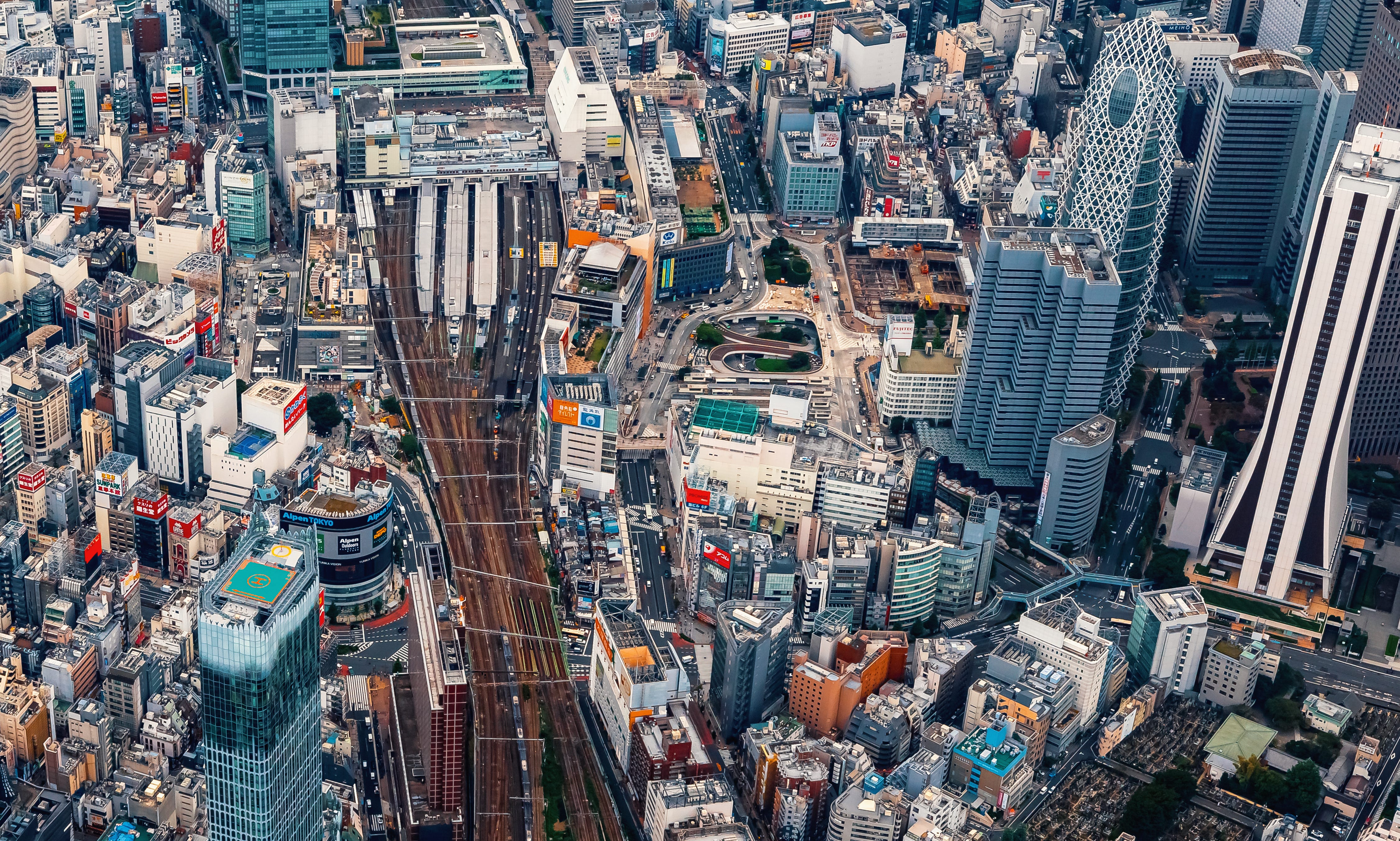
Intense memories come back to me both blurred and sharp at once. I don’t remember how I found a restroom or whether I sustained my hunger. I do remember the sea of people. I remember dark eyes, dark hair. I remember that nobody made eye contact — not once. I remember knowing that if I didn’t speak to a stranger, any stranger, I would not find the platform for a train station in his neighborhood Andy guessed was forty minutes away.
I’d written the station name in my journal, with a question mark beside it, in case my accent obstructed. I approached five or six people. I made eye contact first then gently smiled and shared the same lines: “My name is Debbi, from New Zealand. I need to get to Kodaira station. Can you show me which platform, please?”
An elderly man reading a newspaper over green tea looked promising. He waved me off. The person beside him shook his head. I went younger. Students.
One teenager, hazel-eyed, tried her English: “I helpu — you,” while her friends giggled behind their hands. I couldn’t make out what she meant. Another girl noticed my confusion.
“Are you lost? Can we help you?”
I told them my aspirations and traced my words in my journal with my finger. This worked!
“We show you,” said a third, with gusto. Yes, please.
The group grew as we walked — three, then five, then eight, then ten, in white knee socks, crisp white blouses, and blue blazers, possibly skipping school at nine in the morning. They walked me through the station, across several halls and down several flights of stairs, and delivered me, fifteen minutes later, to the right platform.
I thanked them with genuine relief and euphoria. I couldn’t believe we got there and pulled out some Buzz Bars — a New Zealand marshmallow sweet with honey inside — from my backpack. They were thrilled. The leader, whose English was best, asked if I had my ticket.
I did not. Some panic, though not the full kind. I opened my wallet and showed her the yen I’d converted from New Zealand dollars back in Christchurch. She waited for my nod, then sorted through it, bought the ticket, and walked me through the gates. I waved goodbye and waited where they’d told me to.
You might expect a city that size to move on without a backward glance. These high school girls didn't. There was a kind of sisterly loyalty in it — they wanted to see me safely onto the right train before they went on with their day. They waited until it arrived, and waved again as I boarded.
“Bye, Debbi-chan! Enjoy Kodaira!”
I reached for my mother’s handkerchief, waving back, elated and victorious, having just completed the first leg of an adventure that would last five years, and for now, with no Japanese language. Will, and trust in myself (and in good strangers) had officially saved my day.
Need some help?
I’m an Economist-trained journalist who became a communications coach for foreign-born leaders at Fortune 500s and a Master Certified Coach. (In Japan, I went on to learn Japanese well enough to translate Japanese to English for a leading pharmaceutical firm.) I host communications workshops on Maven. Or book me for coaching.
.